
When you are going to a large event, you have plenty to worry about. Most players have to pay special attention to decklists, punctuality, and strategic decision making, among other things. One thing that no one should have to worry about when they show up to a tournament is if they will feel safe, welcome, and cared for at the event. The goal of Flesh and Blood is to bring people together through the common language of playing great games, and a fundamental quality of great games is a welcoming and comfortable environment to play in. The Experience Coordinator serves to monitor the tournament environment and take action when aspects of the event need to be improved upon. If you have been to a tier 3+ event in the last year, you have probably seen a member of the event staff sporting a very stylish, high-visibility pink vest. The pink vest is not just a fashion statement, but it is a way of making the designated Experience Coordinator for the event as visible as possible. The role of Experience Coordinator is relatively new, with its first appearance being at the World Premier of The Hunted in January of 2025. Since then, all tier 3+ events have staffed at least one Experience Coordinator for the weekend. The role came about as a way to ensure consistent customer service to event attendees, as well as to research the common issues being faced at events so that problems can be identified and solved for future events. The Experience Coordinator role is a way to ensure that, at any tier 3+ event, attendees know that there is someone they can talk to if they are facing an issue. While the role has been present at quite a few events now, there still isn’t much public information regarding who they are, what they do, and how players can use them as a resource.
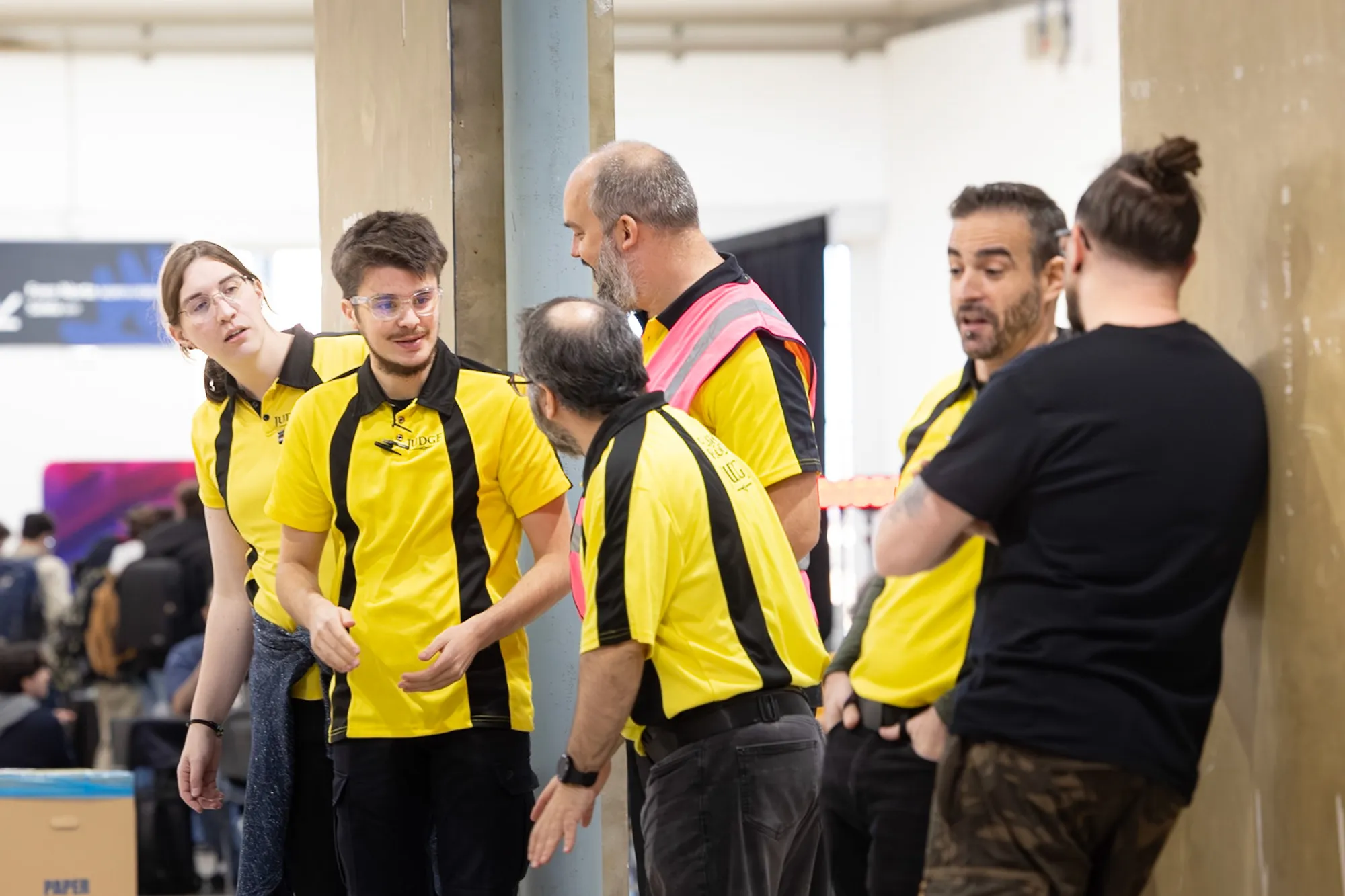
Photo © John Brian McCarthy
Who is the Experience Coordinator?
The Experience Coordinator is a member of the event staff who has specifically applied for the role during the event application window. They are required to be a certified level 1 or 2 judge. They have been selected for the role by the tournament organizer because of their approachability, empathy, and skill in conflict resolution.
What does the Experience Coordinator do?
The role of the Experience Coordinator is designed for two primary goals. One goal is to serve as a point of contact for attendees to deliver feedback (with the goal of fixing issues in the moment where applicable), and the other is to write a tournament report at the end of the weekend that covers the feedback they received about the event.
The Experience Coordinator is not a member of the tournament organizer’s team, so they often don’t have decision-making capability on their own, but they will be familiarized with the tournament organizer’s chain of command and what the process is for resolving issues. Here’s an example: at a recent event, some attendees noticed that the rows of tables were quite close together and that it was difficult to navigate through the aisles. People made their concerns known to the Experience Coordinator, who then talked to the tournament organizer about moving the tables. When they were given approval by the tournament organizer, the Experience Coordinator was then tasked with organizing event staff to rearrange the tables in a way that opened up the aisles.
The Experience Coordinator serves as a point of contact for attendees who feel uncomfortable or unsafe in the venue. Sometimes, the negative experiences that people can have at events are out of the tournament staff’s hands, but bringing attention to experiences that people of certain demographics are experiencing means that the staff can do everything in their power to mitigate it. Whether it is people being treated unfairly because of their identity, accessibility issues, or bullying, the Experience Coordinator can bring it to the attention of those that can take action to make the event a more welcoming place for everyone.
Attendee feedback can also result in feedback for the event staff, which can result in better customer service and rulings. A relatively common variety of feedback that the Experience Coordinator will gather is players’ experiences with judges. When the Experience Coordinator receives feedback for a specific judge, they will then often try to identify the judge in question and deliver the feedback to them directly. This means that the players’ concerns can be heard and put to good use, while alleviating the player themselves of the stress and discomfort that can come with giving negative feedback to a stranger. The Experience Coordinator may have more context or rapport with any given judge, allowing them to deliver the feedback in a way that is more likely to resonate.
The Experience Coordinator will always be a certified judge, which means they can serve as an educational resource on certain tournament practices or rulings. If a player receives a ruling that they don’t understand, the Experience Coordinator will be happy to sit down with them and chat about it. They can also provide more context for other aspects of the tournament. Are you confused about why you got deck-checked more than once? The Experience Coordinator can talk with you about the philosophy behind deck checks. Curious why a judge seemed to be hovering over your table while you played? The Experience Coordinator can explain the instructions that judges are given for staying busy during rounds. One of the core tenets of judging, philosophically, is player education. Judges do not want you to be confused about rulings or tournament processes, and the Experience Coordinator will be the most available judge to ensure that education and transparency are being upheld.
When the weekend is over, the Experience Coordinator writes a tournament report covering the feedback they received over the weekend. This tournament report is to inform the tournament organizer and LSS how the event went and what feedback they received. This task is an invisible but very impactful part of the Experience Coordinator role. Having written documentation of the feedback that the Experience Coordinator received allows tournament organizers and LSS to track and reflect on common issues. The report allows attendees’ experiences at events to be researched, and the first step to solving any problem is to identify what the problem is, specifically. Every member of LSS staff cannot be at every event, and even when they are at an event, they cannot be everywhere. These tournament reports offer valuable insights into what is actually happening on the floor of a tournament, which allows them and the tournament organizer to make educated and well-researched decisions for future events.
When will an event have an Experience Coordinator?
At least one Experience Coordinator will be present at all tier 3+ events, with two at larger events (Worlds, ProTour, etc.). Tournament organizers do their best to ensure that the Experience Coordinator is present all day on each day of the tournament, but when there is only one Experience Coordinator, it is not possible to have them there at every moment, so common practice is to at least ensure they are present during the high traffic times of day.
Where can I find the Experience Coordinator?
Experience Coordinators are typically assigned to be in the event space. This allows them to observe the event closely and be readily available for players who want to speak to them. The easiest way to find them is to look for the bright pink Experience Coordinator vest. The vest is intended to act as a beacon that makes the Experience Coordinator easy to find and identify. If you want to speak with the Experience Coordinator and cannot find them, asking another judge if they know where they might be is a great option. At events where there is only one Experience Coordinator, there is a chance that they are on break or otherwise busy during the time that you want to speak with them. Judge staff will either be able to point you in the right direction, or towards someone who will have a more certain idea of their whereabouts.
Why do events have Experience Coordinators?
The role of Experience Coordinator came about as LSS was ramping up the frequency of tier 3+ events, and this is no accident. The high-visibility pink vest is designed to serve as a universal signal that says “I am here to help”. If you are at an event in a country besides your own, that is run by event staff that you don’t know personally, you can rely on the person in the pink vest to be a good resource if you need to talk to someone. Even if you don’t speak the same language as the Experience Coordinator, they can help connect you with a translator to ensure that your issue gets addressed.
Most judges are happy to hear attendee feedback about the event regardless of if they are the Experience Coordinator or not, and many such judges will also make a conscious effort to act on this feedback. The particular strength of the Experience Coordinator in this regard, however, is that their assigned task for the weekend is to listen to and act on feedback. Personally, when judging a large event, I have found myself in several situations where I hear feedback, decide to act on it, but can’t devote sufficient time to it due to my other assigned tasks. As a judge, I have really enjoyed having a member of staff at every event that I know I can delegate feedback to and know that it will get the attention, action, and follow-up that it deserves.
The Experience Coordinator role is designed to be flexible, allowing them to fulfill a slightly different role for each event depending on the needs of the tournament organizer and community. One constant at events is that unexpected things happen. The Experience Coordinator is there to identify these unexpected issues, handle them, and provide feedback on how to avoid those issues in the future. It is a position designed to research the problems that occur at events, serve as a listening ear to those who need it, and make each day of the tournament a bit better than the last.
How can I utilize the Experience Coordinator?
If ever you are at an event and you find yourself with general feedback on how things are going, whether it is positive or negative, the Experience Coordinator wants to hear it. This is especially true for issues that can be addressed at the event in question. If you have a negative experience, the best thing to do about it is to try to ensure that no one else has to experience the same thing. If you have a positive experience, the best thing you can do is bring attention to it, in hopes that those responsible can be recognized and bring that experience to others. There are a few things that the Experience Coordinator cannot help with, such as if you think a vendor has the card that you want priced too high or if its raining out but you want to go outside the event hall to get food, but any feedback regarding the venue, staff, logistics, or attendee conduct at the event is commentary that they will be eager to collect.
An additional detail that is worth noting: if you have negative feedback, do not be worried about “getting anyone in trouble”. The event staff community is highly feedback based, and critical feedback is a common (and often viewed as essential) aspect of running an event. The people running these events, whether they are tournament organizer staff or judges, want to improve at what they do. Feedback is key to understanding the impact of one’s actions and how to grow from each tournament experience. The Experience Coordinator is not going to put the judge that gave you an incorrect ruling in a corner for time out, they are going to have a peer-to-peer conversation where the judge hopefully turns what could have been an embarrassing ruling into a lesson learned on using their resources. You are not “getting anyone in trouble” by giving critical feedback, you are helping them grow and improve.
Don’t be shy when talking with the Experience Coordinator, their job is to listen. When you approach them with feedback, you are helping them do their job. The judge that was staffed as the Experience Coordinator applied to do that job specifically, they want to do everything they can to make the event go well for everyone in attendance.
New tournament roles are difficult to publicize, especially as the intricacies of the role are still being ironed out. The Experience Coordinator is still a relatively new role, and might take a slightly different form from event to event. This makes the consistent aspects of the role all the more important: the Experience Coordinator is there to help make the event a positive memory for every attendee.
Still have questions? Feel free to get in touch! I want to be featuring topics that are relevant to the interests and education of the FAB community. I would love to hear any questions that you would like to have answered in future articles. Submit your questions to info@arcanegamesandevents.com with the subject line: “Judge Question” or ask me directly at an event and I’ll get you the answer you need.
Topics