
Hello!
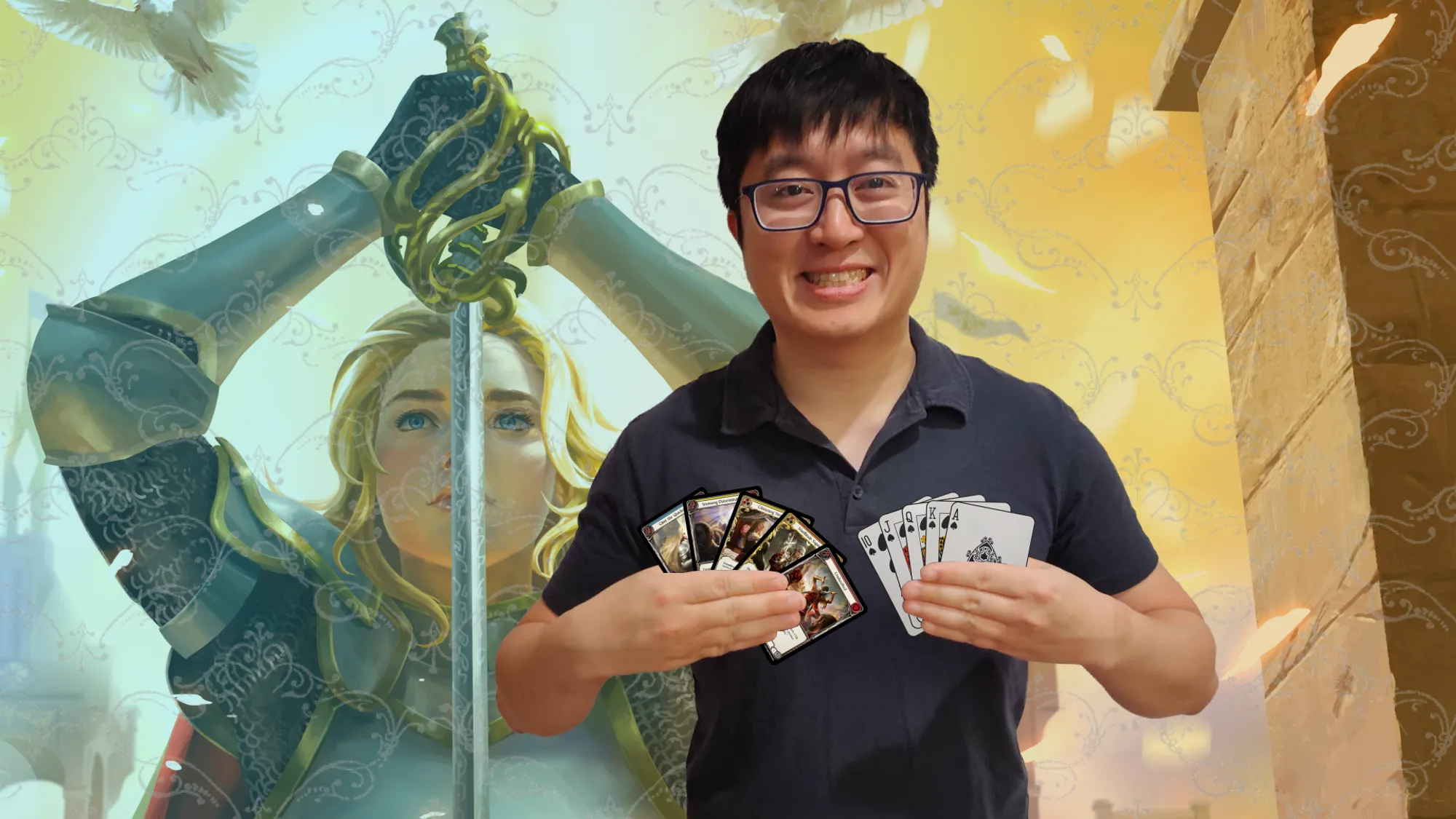
For those that know me, I’m a Dorinthea enthusiast from Los Angeles, California. I started playing Flesh and Blood during Heavy Hitters, picked up Dorinthea Ironsong as my hero, and never looked back. I’ve dabbled with all the other Warriors and played a bit of the Mechanologists, but the gameplay of Dorinthea has time and time again brought me back. I would love to share my experience with the hero!
But first, some tidbits about me. I recently qualified for the 2026 AGE Los Angeles Player’s Championship, earning most of my points playing Dorinthea Ironsong. I also recently took Dori to a 3rd place finish at Calling Las Vegas 2026. With a slew of Day 2 Calling runs and a few Battle Hardened Top 8s, I have somehow become the player with the most wins on Dorinthea in Tier 2+ events (stats from fablazing.com at time of writing).
Why Dori?
The first time I played Flesh and Blood, I fell in love with the highly interactive gameplay between the two heroes on a turn by turn basis, as well as the fact that every single point of damage matters in this game. The feeling of fighting for every single point of value every single turn was so addictive, and Dawnblade Dorinthea perfectly encapsulates this principle. The rush of barely keeping your Dawnblade counters because you made the correct defensive read and leaked precisely 1 damage is a thrill that can not be replicated.
Most heroes in Flesh and Blood follow a pretty simple gameplay loop. You draw 4 cards, look at your hand, decide which cards you can extract the most value from on offense, and block with the rest. However, with Dawnblade Dorinthea you frequently draw hands that get completely shutdown if the opponent decides to block 3, but you decide to keep all 4 cards anyway because you know they won’t block. You deal 10 damage, make 2 Vigor tokens, and permanently buff your sword for the rest of the game. Alternatively, in the late game, you swing your sword for 3, and somehow your opponent blocks with 3 cards in terror of you empowering your sword for lethal damage. No other hero quite embodies the back and forth interaction of reading your opponent and bluffing your way to victory.
Which Dori?
Another reason I’ve stuck with Dorinthea for so long is that she is an extremely versatile hero. Some heroes have the issue of just not being good enough, or having really bad matchups into certain specific heroes, but Dorinthea can always adjust her suit of armor to meet the needs of any matchup. I’ve never had the feeling that a matchup was impossible, only that I didn’t think it was important enough to dedicate enough sideboard slots to deal with it. That said, I would like to briefly mention the many other ways to play Dorinthea.
DGA - Decimator Great Axe fatigue list. Many defensive tools to run the opponent out of threats while halving the defensive value of their cards. Can be run with any other Warrior.
Hatchets Dori - Deck that aims to attack multiple times with Hatchet of Mind and Hatchet of Body while getting additional defensive value from Valiant Dynamo.
Dorindal - Durendal combo list. The deck aims to sharpen multiple times and attack multiple times while reducing the defensive value of the opponent's cards.
All Reactions Dori - Dawnblade Dorinthea list that aims to play no front pumps and play as many attack reactions as possible.
Lifegain Dori - Dawnblade Dorinthea list popularized by Shin “nxi” Inoue, who brought it to a top 8 finish at Calling Las Vegas. The list runs Fiddler’s Green, Sigil of Solace, Oasis Respite and a slew of other defensive cards to survive while threatening the power of Dawnblade.
All these variants bring something different to the table and have their pros and cons, and I recommend trying them out if you haven’t before. They are all fun in their own way, but for the rest of the article, I will be discussing my favorite way to play Dorinthea and the effects of Mastery Pack: Warrior on the deck.
Classic Dorinthea Ironsong - Decklist
Dorinthea Ironsong (Dawnblade) - AGE Article
It took me a while to figure out which variant of Dori I was playing now, or what to call it, but at the end of the day, it’s Dori with her signature weapon, the Dawnblade. The core objective of the deck is simple: hit twice with the Dawnblade to stack up +1 power counters and upgrade that sword into an ever-growing threat for the rest of the game. The pseudo-permanent power boost is so impactful that most of the game revolves around your opponent either scrambling to stop you from gaining those counters or trying to race you down before you can reap the benefits of its additional power.
There are many slight variations for Classic Dawnblade Dorinthea, as different players prefer using different tools to gain counters. It also benefits Dori players to not copy exact lists so opponents can’t predict which attack reactions are left in their deck. I hope to share my insights and philosophy for the cards I chose for my deck.
Value Proposition and Gameplan
As I was figuring out how to explain my deck and how it might differ from others, I finally concluded that the two cards that fundamentally explain my deck are Warrior’s Valor (Red) and Ironsong Determination. Ever since I started playing Dorinthea, I’ve heard repeatedly from other Dori players or content creators that I should take out these two cards, or that I should cut down to only 1 or 2 copies because the cards don’t provide enough value. Every time I cut them, it just felt wrong. It took me a while to figure out why, but here are my reasons for including three copies of these key cards.
Warrior’s Valor (Red)
Warrior’s Valor is the foundation of my value proposition for Dawnblade Dori. Fundamentally, paired with Dawnblade and a blue, it is a 2-card 9 on hit that threatens a Dawnblade counter or a 2-card 6 on block.
I’ve been told many times that this card is bad because it doesn’t work with Twinning Blade. Twinning Blade lets you attack again with your sword without hitting as long as it’s been given Go Again, but since Warrior’s Valor doesn’t give Go Again unless you hit, your opponent can block tall safely. Counter point: Warrior’s Valor works great with Twinning Blade because opponents think that they are safe from Twinning Blade and over block. One Glint the Quicksilver later and suddenly Twinning Blade becomes the potent sidestep it’s designed to be. Usually, to get an opponent to over block, one must provide ample fear of a hit, but another way to get an opponent to over block is to provide the safety of a block, while providing a threat for a non-block, and Warrior’s Valor does just that.
I’ve also been told that this card isn't great because it makes it really easy to block the second swing and therefore, doesn’t lead to a counter. It wastes value and resources on the first swing if they don’t block, since they can just block for less on the second swing. Counterpoint: even if you don’t get the Dawnblade counter, you still hit and got 9 value. Alternatively, if the opponent successfully blocked, you had a 2-card 6, but your opponent likely used 2 cards to block as well, meaning your opponent also had a 2-card 6. That said, the true goal is to coerce your opponent into blocking, lowering the value of their cards, and playing attack reactions to land a hit and get your value. Even if that doesn’t happen, you still met your objective the moment they blocked.
Ironsong Determination
I remember going to my first AGE Open in March of 2024 and asking to borrow/buy 3 Ironsong Determinations from local players, and the immediate response I got was just shock that I was running 3 copies of the card. I still see content creators talk about how you should only run 2 copies of the card or that you should only bring them into tanky matchups to try to leak damage and that you should take them out against aggro. People are completely missing the point of this card. Ironsong Determination helps you BLOCK.
Ironsong Determination gives your weapon +1 power for the turn. That means if you attack twice, and they don’t block, it’s a card that gives only 2 value. So how can this card be good? Let's talk about how this card is used differently in defensive matchups versus aggressive matchups.
Against a bulwark of blocks this card is pretty straightforward. It is extremely hard to get Dawnblade counters, so your whole objective is to try to set up large turns and land two hits (ideally with cards that give additional benefits, such as Steelblade Supremacy and Glistening Steelblade) and snowball counters into a win. Give your Dawnblade Dominate and suddenly it’s a lot easier to meet this objective. Ironsong Determination is also very beneficial for setting up a 5-card hand once you get a counter. Frequently, you will use all your cards to leak just a bit of damage. Ironsong Determination is your opportunity to hit your opponent without utilizing all of your resources and save something for the arsenal.
In aggro matchups however, the win condition is a lot different. If the game goes for a few turns and no one blocks anything, they will deal 20 damage a turn while you are trying to get counters, and you will die before you get to utilize your enhanced weapon. In order for you to win the game, you must accumulate counters while blocking as much as possible. It may seem like the strategy would then be to add defense reactions to block more, but then you run into the issue of drawing weak hands and being unable to accumulate or keep your counters. The key of Ironsong Determination is that it allows you to reduce their block ceiling so that you can block more. Imagine the following hand with a Dawnblade counter:
Since you have a counter, it is a hand that can attack for 4, and then be buffed by Puncture three times to 13. Ideally, you would like to hit this turn to keep your counter. It is impossible to know if the aggro opponent is going to draw a dead hand and is going to block 12, or if they are drawing four offensive 2-block cards that they are going to attack you with, so you can’t safely block with your cards without risking your precious counter at the same time. You can make a guess that they will probably not block that high (which is fun in itself) and maybe block with 1 Puncture and 1 Overpower, that way you can maybe attack for 4, and if they don’t block, you can pump to 7 and save a card in arsenal, or if they do block pump to 10 and try to keep the counter. If you make the guess and you are right, it feels great (and hence why Dori is so fun) but if you guess incorrectly and they block 12, you lose the counter that you worked so hard for.
The issue is that paying 1 to pump an attack for 3 is really bad value, so by keeping cards you reduce risk at the loss of value. Ideally you would want to block so you can slow down the game and accumulate more counters. Cue Ironsong Determination. Imagine the following hand:
Now when you play Ironsong Determination and attack, it is coming in for 5 with Dominate. It’s now impossible for your opponent to block with multiple cards from hand, so they either have to use equipment or a defense reaction from the arsenal. You can now safely block with the excess Overpower and Puncture, keeping one Puncture and saving it in the arsenal if they don’t block.
In essence, you should try your hardest to never play cards for below rate, unless your opponent is blocking with cards for below rate and forcing you to do so. This principle is even more important for cards with Reprise. In aggro matchups, you have to slow down the game as much as possible so that you can accumulate counters and have time to use them.
Force them to Block
Part of the gameplan of Dawnblade Dorinthea is to get the opponent to block as much as possible and reduce the value of their cards while you bypass their blocks, land hits, get counters and increase your value game over time. For decks that are too fast, you need devastating on-hits that are so powerful that they have to block. For decks that are too good at stopping your hits, you need to have a blowout turn where you hit and build a game state where you have too many resources for your opponent to continually stop you from hitting them in future turns. For that, we have the two specializations: Steelblade Supremacy and Glistening Steelblade.
Steelblade Supremacy
Steelblade Supremacy is Dori’s best card. It naturally has value as it gives +2 power to all weapon swings and threatens to draw a card on every hit. It combos extremely well with Unsheathed and Ironsong Determination. Drawing them together is akin to drawing a royal flush, giving you a path to victory no matter the matchup. Steelblade Supremacy turns are frequently the make or break moments in many games. It is the primary arsenal target to set up a big turn and snowball the game. I recommend arsenaling Steelblade Supremacy (while bluffing the normal on-hits of the Dawnblade) if you don’t draw the necessary cards that help you hit with it.
The card matters so much that in more defensive matchups, I will often opt to expend meaningful resources just to maximize its potential. Consider the following hand:
I’ll play Steelblade Supremacy – pitching Overpower – and swing Dawnblade attacking for 5. Say the opposing Hala blocks with only Valiant Dynamo. In this situation, I would almost always pass reactions and just break Refraction Bolters if they pass back. The risk of playing Glint the Quicksilver for Go Again means my damage cap is only 9 as Singing Steelblade only pumps by 4 with 1 resource (by fetching Ironsong Response). This means that I would be blocked out by two 4-value defense reactions. Alternatively, waiting for a defense reaction and triggering Reprise greatly increases my damage cap for the turn. Keeping an extra blue in hand is also very beneficial depending on what card I draw from Supremacy, and if I draw an inconsequential blue, I can pitch it to Braveforge Bracers and Grains of Bloodspill. Refraction Bolters are not just for emergency situations in which you don’t have Go Again!
Speaking of Grains of Bloodspill, it is my chest piece of choice in the deck. It pairs extremely well with Steelblade Supremacy, as their combination of on-hit effects frequently allows you to end your turn with 2 Vigor tokens and a card in arsenal. This sets up your next turn to have a “6-card hand” and makes it easier to get additional counters and keep the snowball rolling. The moment you hit twice with Steelblade Supremacy, all tempo is in your favor!
Glistening Steelblade
Ask any non-Dori player and they will say that Glistening Steelblade is Dori’s best card. Ask any Dori player and they will say that Glistening Steelblade is Dori’s worst card. It is a yellow that requires you to pay for Go Again and adds no value to your current turn but provides the devastating on-hit of making a counter. It feels terrible to play but is a necessary evil, as the on-hits win you the game. It is a card that cannot be ignored. It is your comeback card. Late game, pair it with Ironsong Determination and – if they have no armor left – you can seemingly pull 3 Dawnblade counters out of thin air and stage a comeback.
That said, Glistening Steelblade is dizzying when combined with Twinning Blade. Twinning Blade requires Go Again and your opponent to overblock in order to gain value, and Glistening Steelblade provides just the right criteria for that to happen. Unlike Steelblade Supremacy, I would not arsenal Glistening Steelblade in the early game to set up a big turn (unless it’s a super aggressive no-block matchup). I would rather play it and force my opponent to overblock and accept that it won’t hit. To drive it home, my soul is crushed when I draw this card in pairs.
These two Specializations along with the normal threat of making a Dawnblade counter forces your opponent to block, allowing you to reduce their value per card and slow down the game for you to accumulate value. If they block and you still manage to land the hit, you’re in great shape!
Keep Counters and Win the Game
Once you get a single Dawnblade counter, your turn-over-turn value is stronger than any other hero. Warrior’s Valor (Red) paired with a Blue is now a 2-card 11. Your opponent now has to try to stop the first hit of the Dawnblade in order to force you to remove the counters, which means your job is to hold onto them with an Ironsong grip. Here’s how:
Beat of the Ironsong and Swordmaster’s Shine
In Super Slam, we got Beat of the Ironsong, the first card that powers up on its own as we accumulate Dawnblade counters. In Compendium of Rathe, we got Swordmaster’s Shine, another card that scales off of the number of counters. With 3 counters, it's a 0-cost +5 power! That’s almost a Tarantula Toxin! At +5 power, it eeks over 4-block defense reactions and allows us to keep our counters. I still only run two copies of Swordmaster’s Shine despite its powerful effect, as drawing multiple copies early can completely hinder your offense (similar to untimely Hunt’s Ends for Fang). Arsenaling Swordmaster’s Shine early is also incredibly risky as it frequently sits there until you manage to draw a 2-3 blue hand. That said, it’s power is too great for me to not play.
Card Tip: Use Beat of the Ironsong’s “cards can’t gain defense” effect to destroy Temper equipment that gain defense – like Basalt Boots. Be wary that heroes such as Teklovossen can have other ways of saving their armor. In my round 9 match against Xincheng Hou at Calling Las Vegas, I proactively triggered Singing Steelblade to fetch Beat of the Ironsong when my opponent blocked with a piece of Temper equipment on its last legs thinking he was going to play Fabricate, but instead he played an Evo as an instant. A better tell if an opponent is going to use Fabricate is when they block with all of their armor! With the extra knowledge gained, I got my revenge in my top 8 match!
Overwhelming Swing and the Blue Problem
Overwhelming Swing, in my opinion, is the greatest upgrade to Dori from Mastery Pack: Warrior. Many Dori players seem afraid of this card, but I urge them to try it. I initially ran six 1-cost +3 power attack reactions and have opted to only run three alongside 3 copies of Overwhelming Swing in almost every matchup. In addition to being an emergency yellow pitch, this card also single-handedly solves the blue problem.
What is the blue problem? Mid to late game, you will get to a point where you have a Dawnblade counter and your opponent is trying their hardest to stop you from hitting. Each turn, you hope to draw a balanced hand and leak damage to keep your counters, but eventually you draw the dreaded 3 blue hand that doesn’t have enough power. There are a handful of ways to deal with this problem:
The first is Copper (super underrated!) and hence why I play two Spoils of War in my deck. Turn your blue hand into reds! The next is to include blue power cards such as Overpower (Blue) and Backside of the Blade. I’ve experimented with Backside of the Blade in the past but eventually cut it as it frequently requires too many resources or an Agility token. The next solution is Ironsong Determination, as an attack for 5+ power with Dominate will typically hit. Last, but not least, is Overwhelming Swing (and by extension Singing Steelblade). Even if your opponent takes the Dori antidote and blocks 12, a 4-cost +9 power will allow your Dawnblade with a counter to swing for at least 13!
Don’t fret too much about the unpredictable card cost and whether or not you should make a Vigor token or activate Braveforge Bracers. The more you play, the more experience you will gain, and predicting your opponent’s blocks is one of the funnest parts about playing Dori!
Card Tip: Overwhelming Swing can be dangerous to play against decks that have strong Battleworn armor as they can repeatedly block to manipulate your cost. For example, I don’t play it against heroes such as Rhinar as they typically also run very few defense reactions, so I don’t need the additional power from the card.
Other Mastery Pack: Warrior and Tech Cards
Gleam of the Blade
Everyone thought that Flurry tokens were going to break Dorinthea; however, the requirement of needing two sources of Go Again frequently makes the token provide no value. I only run one Gleam of the Blade against tankier decks. It does work quite well to use at the end of your turn if Dawnblade connects (so you don’t play a below rate 1 for 3 and instead make a Vigor and Flurry token), but the fact that it blocks 2 is too painful for my Warrior heart to bear.
I also run one copy of Goblet of Blood Run Wine. I’m haunted by the thought of wasting tokens so I only run one copy of each. The thought of making two Agility tokens or two Flurry tokens is as painful as drawing a 2-block when my opponent plays Command and Conquer.
Donkey
Donkey is gas and my favorite card from Mastery Pack: Warrior. It's a Provoke-like card that also provides offensive value and costs 0. This card is especially effective against decks such as Mario as they usually try to arsenal high priority targets and unpredictably block really high.
Run Through
It’s really nice to have another source of reaction-speed Go Again in the form of Run Through (Blue). This makes it harder for your opponent to read whether you are playing Glint the Quicksilver, Beat of the Ironsong or just using Refraction Bolters. I tried running the Red version, but ultimately came to the conclusion that it is a great card but doesn’t meet my value benchmark if the opponent blocks the first swing. I prefer consistency and value over the high roll mind games.
Defensive Cards
I run one copy of Shelter From the Storm, Sigil of Solace and Sink Below. I generally minimize defensive cards as they reduce the consistency of the deck and you want to be pressuring your opponents the majority of the time.
I find having a Shelter against Cindra or Katsu at a critical moment is backbreaking for them (despite the matchup being pretty tame without it). Stopping a Throw Dagger, Ancestral Empowerment, Okana Scar Wraps or Silverwind Shuriken has too much value and frequently wins the game outright. That said, I hate playing two and risk losing tempo.
Vynnset is hard to race as Dori as the speed and disruption are tough to overcome. For Vynnset I generally prefer playing an “aggro fatigue” style where I only attack when they set up, prioritizing arsenaling cards with swing turn implications. I was on more copies of Sigil of Solace and Sink Below for my Calling run as it helped against Vynnset, but my priorities have shifted with the meta.
Valda is another hero that can be hard to defeat. Defense reactions inherently work well against Dominate. If Valda is a popular hero, bring more defense reactions!
Mario is also an annoying matchup that can benefit from defensive cards. It’s been a hard matchup for me to solve with limited sideboard space. Running 12+ defensive cards makes the matchup pretty easy to play, but unfortunately the rest of my shell doesn’t allow me the liberty. Running 1 or 2 defensive cards just allows their arsenaled Tarantula Toxin to get full value, so instead I play a high variance offensive game and hope for the best. If your locals are littered with Marios, I highly recommend trying a more defensive deck such as nxi’s list!
Nasty Surprise
Nasty Surprise is an amazing card in Dori in the current meta as she uses all three of the tokens generated extremely well.
I originally ran this card at Calling Las Vegas due to the resurgence of Jarl Vetreiði. Having a Nasty Surprise in hand when Jarl activates Coronet Peak, Blizzard or Winter's Bite brings insane offensive value. It also works really well against Valda’s Put ‘Em In Their Place. Change your negative Pummel experience into a positive one with a Nasty Surprise!
It’s also great against the surge of new Warriors from MPW. Having this in hand as they block with Blunten feels amazing.
Honestly, the best part about Nasty Surprise is that you and your opponent will have a good laugh as you resolve it, and having fun is what this game is all about! I still haven’t unlocked the achievement for killing my opponent with it yet, although I got real close in my Round 11 match against Dagan White’s Betsy. He blocked 12 against my Dawnblade with Go Again, but as I went for the lethal blow he played Sigil of Solace from arsenal…
Thwart
Should you quit Dori because of Thwart? Short answer – nope. If an aggressive hero plays this, they are slowing down their game, which is exactly what you want. If they draw it at the wrong time, it’s a “must block” card that triggers your Reprise effects. If anything, it is just a card that increases game variance. The only aggressive deck that this card probably doesn’t slow down is Gravy Bones, and we can give him a small break.
On the flip side, a defensive deck typically isn’t too concerned about Dori as the matchup is pretty favorable for them anyways. They would rather use their sideboard slots for something else. The only reason you would play this is maybe if you were a Betsy main in the 2026 AGE Los Angeles Player’s Championship and got paired into a Dorinthea main for round 1... Please don’t do it Zachary Wallach, have some mercy!
Thank You
Thanks for hearing me yap about my favorite hero! If you’re a Dori main, I hope that reading this has either taught you something new or opened up a different perspective about Dori, even if you don’t agree. If you don’t play Dori, I highly recommend you try. It’s a fun deck!
Feel free to reach out to me on Discord (reket0) if you have any questions!
Topics

Richard Truong
Hello, World! I'm Richard Truong, a SoCal-based Flesh and Blood enjoyer and Dorinthea enthusiast extraordinaire!