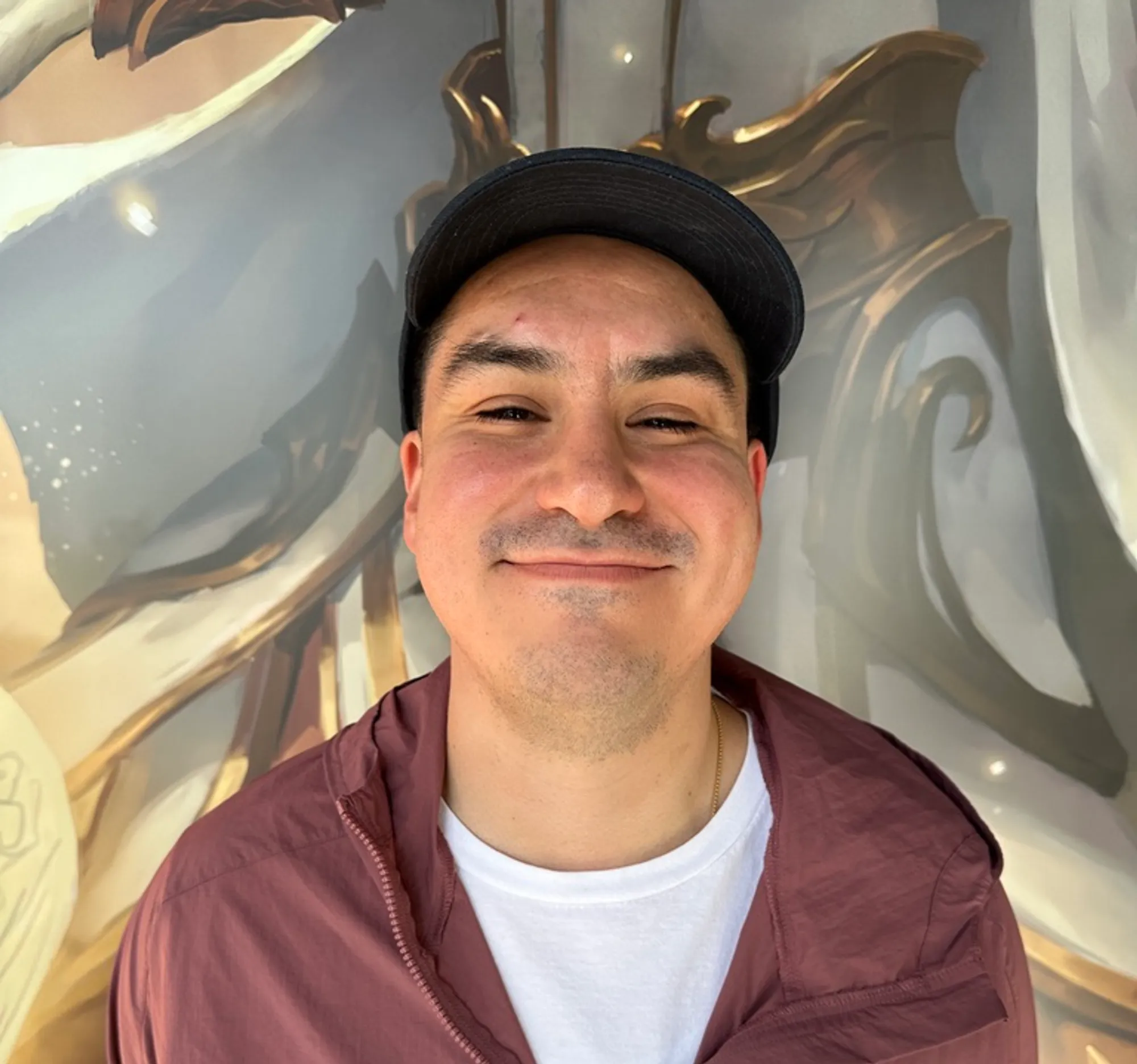
The AGE Open Series is flush with Flesh and Blood maestros. To claim some vaunted silverware (okay, a plastic medal), a cash prize, a bundle of AGE Points, and, of course, bragging rights, you will have to get through some certified killers. On the West Coast, that means players like recent Calling: Seattle champion Chris Iaali and former United States National Champion Charles Dunn. On the East Coast, that means perennial contenders and Runaways team members Connor Bryant, Pheano Black, and Noah Beygelman (the latter of whom bears the distinction of being AGE New England’s inaugural champion).
There are also the burgeoning champions of the future. Here in Los Angeles, I watched from the casting booth and across the table as beloved local Paul Selinske and Pitch It To Me Podcast host Clark Moore each earned their first invite to the Players’ Championship. In New England, Joshua Tavares and Ka Chan took just one season to establish themselves as crowd favorites. If you’re in St. Louis, your name could occupy this space this time next year.
Suffice it to say: if you can steal a game here, you can steal a game anywhere.
What is the AGE Open Series?
The AGE Open Series is a yearly tournament series across multiple circuits. As of this writing, three separate AGE Open Series circuits are in operation: Los Angeles, New England, and our newest member community, St. Louis. Each Series will consist of 8 Opens, culminating in each circuit’s Players’ Championship (more on that later).
Each AGE Open costs $40 to attend. The bulk of these funds go to the prize pool for each event (and the Players’ Championship at the end of the season) and the rest help pay for the Judge and other AGE personnel that maintain the Series. The winner decuples their money—bringing home a considerable $400—and the greatest amount of precious AGE points possible.
After the 8 events, the Top 16 players in each circuit with the most AGE points will qualify for their respective circuit’s Players’ Championship. First and second place at each AGE Open receive 30 and 25 AGE Points respectively. Third and fourth receive 20, while fifth through eighth receive 15. But don’t stop playing just because you’ve been eliminated from Top 8—ninth through twelfth get 12 points and thirteenth through sixteenth get 8 points. Finally, you will receive at least 1 point for participating in each event. While 1 point may seem a pittance, at this level of competition, a point can be the difference between ecstasy and agony. Just last year, one of the Three Floating, Aidan Kwasneski, missed out on qualifying for the Los Angeles Players’ Championship by just one point.
The amount of points needed to qualify for the Players’ Championship will vary by year and region. In Los Angeles, the 16th seed needed just 41 points to qualify in 2023, but that number shot up to 56 in 2024 and 61 in 2025. Last year, New England’s freshman outing, the 16th seed had 49 points. If history is any indication, that number will go up this year. The freshmen in St. Louis have an opportunity to get in on the ground floor and establish a name for themselves early.
This series concept makes the AGE Open Series different from most other tournaments in which you may have previously competed. Perhaps most obviously, your results carry over within the same year. Each week you have a chance to build upon the momentum you achieved in the last month’s Open. It also means there is always something to play for. If, for example, you have started your ProQuest or Road to Nationals event at 0-2 and are therefore disqualified from Top 8, you have no incentive (other than fun!) to keep playing the tournament. However, in a tournament series, you are still very much alive for Top 16 and the AGE Open points that come along with it.
Those of us in the AGE Open Series live by one maxim: consistency rewards. Let’s say you want to reach 60 AGE Points to give yourself a good shot at qualifying for the Players’ Championship. If you come to just one AGE Open and win the whole thing, earning a whopping 30 AGE Points, but miss out on top 16 at every event thereafter, you will finish with just 37 AGE Points. However, let’s say come to all eight events, and achieve the following feats: one Top 4, one Top 8, one Top 12, two Top 16s, and three misses. That’s a total of 66 points. Not too bad at all.
Each circuit’s 16 best qualify for the Players’ Champion, the culmination of the year’s tournament results. The Players’ Championship is the only invitational of the year and boasts a unique tournament structure. Last year, the winner of the Los Angeles Players’ Championship received $1,100, a Pro Tour Invite, and a Gold Foil.
Here’s another exciting feature of a Series, as opposed to a discrete tournament: the repeat players. As you grind for AGE points throughout the year, you will see the same players against whom you are jockeying for a Players’ Championship position. Naturally, friendly rivalries develop. These rivalries are now captured in the updated AGE website, which provides a manifestation of those repeated clashes. For example, as of the date of this writing, you can see on my profile that my “Nemesis” is Colin Eriksen, against whom I have a paltry 0-2 record. That changes this year, Colin.
Tournament Preparation
The February 2024 AGE Open was my first non-armory Flesh and Blood event ever. In case you find yourself in the same position as I was, an inexperienced gamer, allow me to provide you with some general tournament preparation tips.
Your tournament run hinges on what you brought in your backpack. Here’s what I would recommend bringing to your first AGE Open:
- Your deck. An entire article could be devoted to the concept of tournament deck selection; perhaps you will eventually see one on this very website. I suspect, for most people, the question will be straightforward. What do I feel like playing today? What do I even have the cards to play? Or, perhaps like AGE Los Angeles local Colin Eriksen, you have carved a niche for yourself as a devotee of a specific hero (in Colin’s case, Kassai). In any case, the first and most important thing you will need is your deck, preferably in a deck box. I suggest reviewing the contents of your deckbox alongside its corresponding Fabrary link. AGE Opens are judged at a Competitive Rules Enforcement Level, which means if your deck is different in any way from what you submit, the Judge could give you a penalty.
- $40 and your GEM ID. If you are a nervous over-preparer like me, you would have pre-ordered in advance and secured your ticket. If you didn’t, you’ll want to have the entry fee ready upon arrival.
- Accessories. This may seem straightforward, but you may be surprised how often I forget these things. In order of importance, here’s an exhaustive list of the accessories I would consider bringing: (1) a bag to hold your stuff; (2) dice and tokens, as needed; (3) a playmat; (4) a pad to track your life; (5) a writing instrument; and (6) extra sleeves matching those used for your deck.
- Sustenance. Your average AGE Open is typically five or six rounds, exclusive of Top 8. If you complete the whole event (and I would encourage you to do so), that is more than half a day of cardboard gaming. The LGS hosting the Open may have drinks and snacks on hand, and there may even be a quick and accessible food spot nearby. But let’s not leave it to chance. Bring a water or coffee. Bring some food. The first step to becoming Brodie Spurlock is having a ham sandwich.
- Your Trade Binder and Other Decks. It is not controversial to say that the best thing about Flesh and Blood is its community. The regulars at AGE Opens are no different. You will hopefully see friends, both existing and future, throughout the day. If you’re lucky, the host LGS may also hold side events once the Swiss portion of the tournament concludes.
Necessary items and materials aside, make sure you’ve accounted for the practical issues as well. The entirety of Swiss will typically take around six hours to complete—accounting for Top 8, the winner will be competing for around nine total hours. Make sure you didn’t schedule an appointment or a hot date too early (if the scheduling of Calling: San Diego is any indication, this could be a recurring problem). Additionally, while we do our best to schedule each event in as convenient a location for as many people as possible, attendance will require a commute for many. For example, as of this writing, AGE St. Louis will take place in Fairview Heights, Illinois; AGE New England in either Whitinsville, Massachusetts or Nashua, New Hampshire; and AGE Los Angeles in Riverside, California. Make sure you account for travel time.
My AGE Open Journey
I would not fault you for feeling a bit intimidated by the prospect of competing in the AGE Open Series. You could have, like me, only been playing this game for a few months before deciding to take the leap. Or, you could be a mostly casual player that has never had much of an appetite to test yourself at a competitive event. Let me try to convince you to join us.
Thanks to the historical Season Standings (now available on the freshly-polished AGE website), we can go back to February 1, 2024: my very first AGE Open. My first match? Former U.S. National Champion Charles Dunn playing fatigue Bravo. My poor Kylorias were doomed.
Devastating losses to far superior players did not break my spirit. I came back two months later, on April 15, 2024, and managed to pilot my Dromai, Ash Artist deck to a 4-2 record in Swiss, good enough for my first Top 8.
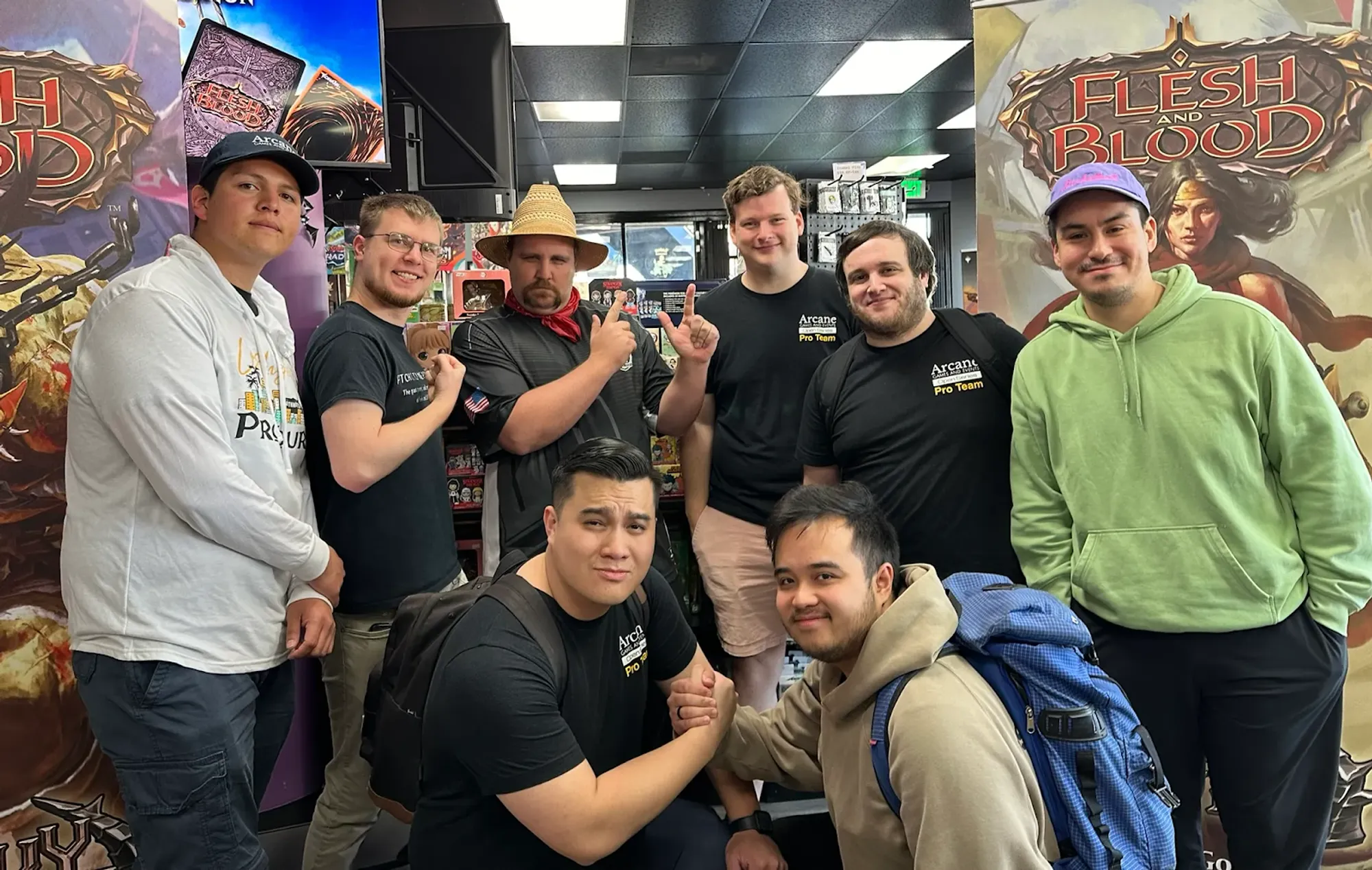
I even managed to get one of my Swiss games on stream! I felt like I had finally reached something resembling a mastery of my 80, but, suddenly, tragedy: Arthur Trehet and his Sigil of Solace conquered Pro Tour: Los Angeles and sent my beloved Dromai to the annals of history. If I wanted to keep my success going, I was going to have to do it on a new hero.
On May 1, 2024, I sleeved up Kassai of the Golden Sand and headed out, hoping for the best but keeping my expectations managed. Even my modest expectations were flattened, as I finished a limp 1-4-1 in Swiss. If you can believe it, that was not good enough for my second Top 8. I competed in a couple more Opens that season, but, in truth, I was already setting my sights for the 2025 season.
I found much more success in the 2025 season. My four Top 8 finishes in AGE Los Angeles Open events were good enough to qualify me for the Players’ Championship as the 8th seed. However, I ultimately failed to qualify for the Top 8 of the PC, losing my Round 5 win-and-in against eventual runner-up Travis Wagner. Room to improve for 2026!
Final Pitches
OK, let’s say you’re still not convinced to join us (impossible, surely). These next three facets of the Series are my personal favorites.
First, the AGE Open Series provides an opportunity to play games on stream to players who normally do not do so. Last year, I helped convince two friends from my LGS to attend their first AGE Open event. As luck would have it, both managed to have one of their Swiss games streamed. In addition to being, well, cool, players who have their games put on stream get the benefit of re-watching their playlines and receiving insightful commentary from our regular roster of casters, like Bryce Platz and Michael Murray. The sheer number of streamed games also allows the AGE production team to expose exemplary individuals from a specific area to the wider Flesh and Blood community. This year, the chances of being showcased are doubled, as each AGE Open that is streamed will have footage of an extra game each round accessible to subscribers of AGE Premium.
Second, the Series can provide an avenue to grow your own personal community. I attended my first AGE Open event alongside several friends from my LGS (shoutout to Turn Zero Games!). Over time, we all became more acquainted with other regular AGE Open competitors from outside our LGS. Those folks who were previously strangers have since become monthly fixtures and, in some cases, my teammates. With respect to my Flesh and Blood travels, some of my favorite moments have been with people I had not met previously asking if I was the guy who played Fang, Dracai of Blades on an AGE stream. What might have never been an interaction instead became an opportunity to discuss my favorite hero with a fellow Draconic enjoyer. That’s what it’s all about.
Third, the Series makes you a better player. As collegial as the Flesh and Blood community is, FAB is, at its core, a game that is catered towards its competitive scene—praise be to James White. As such, most Flesh and Blood players I know are invested in consistently improving their game. The AGE Open’s gauntlet of Flesh and Blood’s toughest obstacles makes for a hyperbolic time chamber, of sorts. These matches were my personal dojo. Last year was easily my most accomplished in FAB, in large part because I went from AGE point obscurity in 2024 to a comfortable qualification for the 2025 Los Angeles Players’ Championship. The confidence I built in AGE also seeped into my other competitive Flesh and Blood events. How scary can my Battle Hardened opponents be compared to the former National Champions and Calling winners I have to try to get past on a monthly basis?
While you will battle these incredible players, your true comparator will always be yourself. The AGE system provides for carry-over, not just across events, but across years. The updated AGE website now synthesizes your total performance over time with a singular, discrete Rating. Consistent performance enhances that rating. From 2025 onward, your AGE profile will also denote the number of times you brought a hero to an Open, meaning that you’ll be able to track your performance-by-hero over time.
As thrilled as those of us at AGE are to be bringing Season 4 of AGE Los Angeles, Season 2 of AGE New England, and Season 1 (!) of AGE St. Louis, these achievements would ring hollow without our foundational community. I hope you will join us. See you out there—I’ll be trying to shoot the moon from an 0-2 start to earn those sweet, sweet Top 16 AGE points.